Marketing Predictions for 2026
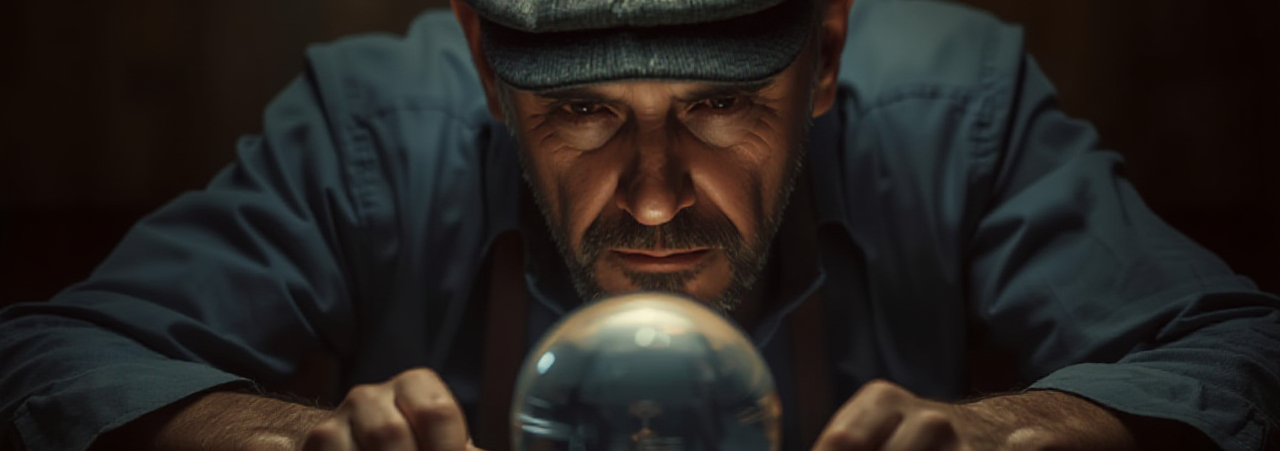
Happy New Year. Welcome to 2026.
I thought I’d kick things off with a few predictions, partly because I was asked to do exactly that by the good people at Marketing Unfiltered just before Christmas, alongside a bunch of genuinely excellent marketers. And me. A bloke with bins.
So here they are. Take them, challenge them, or stick them in the bin.
Either way, let’s begin.
Prediction One: AI Will Bring Brand Marketing Back From the Dead
Yes, I know. Another AI take. Bear with me.
What we are seeing now with AI assistants baked directly into search is a fundamental shift in how people discover brands. Fewer people are searching, scrolling, comparing, and clicking. More people are simply asking AI what to do, buy, or choose and then doing exactly that.
There are already estimates suggesting that up to 70 percent of traditional SEO driven direct traffic has died since AI assistants were integrated into search. Whether that exact number is right or not almost doesn’t matter. The direction of travel is very clear.
And here is the interesting bit.
When AI is choosing what it believes is the best or most appropriate option, brands suddenly matter a hell of a lot more. If everything looks the same, sounds the same, and claims the same things, the AI has no meaningful signal to work with.
So the winners will be the brands that are visible, distinctive, memorable, and actually stand for something. Brands with clear values, clear positioning, and a recognisable voice.
For all the doom and gloom around AI and marketing, I think this brings us back to something trained marketers have always known. Brand is what drives long term growth. Performance marketing plateaus. It always has. It always will.
The fact that some people are only just realising this does not make it less true.
Prediction Two: AI Will Create a Sea of Same
AI is very good at doing things. It is very bad at thinking.
Large language models are designed to converge on the most statistically likely answer. The safest answer. The most obvious answer. That is the opposite of what good marketing strategy and good creative work require.
If AI is misused for strategy and creative, and it already is, we are going to see categories become even more homogenised than they already are. Same positioning. Same tone. Same language. Same visual tropes. Same bloody everything.
In truth, from a competitive point of view, that is brilliant news.
There is nothing easier than winning in a category where everyone looks and sounds the same. No differentiation. No mental availability. Often very little physical availability either.
For the smart marketers who are willing to zig while everyone else zags, there is a massive opportunity here. But it requires something that can be uncomfortable in boardrooms.
Leaning into humanity.
Marketing is about the market.
The market is people.
People are driven by emotion.
Benefits. Outcomes. Feelings. Not features and functions and decks full of rational justifications.
The marketers who can persuade leadership teams to resist the sea of same and commit to being genuinely distinctive will win. The rest will blend in nicely and wonder why growth is hard.
Humans in the Loop Still Matter
This is where the human part really matters.
A quick shout out here to John Bennett, a friend and former client of mine, whose book on AI, Don’t Surrender Your Thinking, I have been digging into recently.
He talks about a Human AI Human loop, or the HAHAH method.
You start with a Human prompt.
You take the AI output.
You revise it as a Human.
AI revises its output. You might repeat this and the previous stage a few times.
Finally, the Human accepts it.
HAHAH.
That is how AI actually becomes useful. Not as a replacement for thinking, but as a tool inside a human led process.
I use tools like Perplexity for deep research and ChatGPT for repeatable tasks and idea stimulation. They are incredibly powerful. But they do not have judgement, emotional understanding, or strategic instinct.
Not yet anyway.
The opportunity in 2026 is not humans versus AI. It is humans who know how to use AI properly versus everyone else blindly copying and pasting to create near identical slop.
Prediction Three: More Fractionals, More Specialists, More Mix and Match
The final prediction is not about AI at all. I know, who’d a thunk it?
It is about how businesses hire and use talent.
I think we are going to see even more use of specialist consultants and fractionals through 2026 and beyond. The economic climate makes long term commitments feel risky. And businesses want flexibility.
They want to switch capability on and off.
They want the right expertise at the right time.
A fractional working one or two days a week is already more cost effective than a full-time hire. Cost effective, not automatically effective of course.
There is a difference.
I am excellent, obviously, bloody amazing in fact, but not all fractionals are created equal.
What? No, YOU fuck off.
Anyhoo, more importantly, businesses are starting to hire for stage, not just for seniority.
An immature business might not need a highly strategic CMO. They might need someone to roll their sleeves up and sort out CRO, RevOps, or Go To Market execution before they even think about brand plays.
They might want a Growth Hacker. Obviously if you’ve been trained in effective marketing you don’t have to hack, it’s a nonsense. So to be clear, they certainly don’t need an untrained marketer throwing spaghetti at the wall to see if it sticks, but for various reasons they might want one.
Anyway, I digress.
So, as more new businesses are created, and AI is only accelerating that, the gap is not ideas or products. It is understanding the market, product market fit, and how to actually get to market and create revenue.
That is where experienced fractionals earn their keep. And I expect we will see more fractionals working together, supporting each other, and forming loose networks around growing businesses.
That can only be a good thing.
So That’s My Take
Those are my predictions for 2026.
- More brand marketing.
- More homogenisation for the lazy. Thanks for the easy wins, yo.
- More opportunity for humans who think properly.
- More fractional and specialist work as businesses get smarter about how they buy talent.
Feel free to challenge any or all of it. Or add your own thoughts.
I would genuinely* love to hear what you think.
Until next time.
* If it’s not fluffy gobshite or fantasy.
Right. The Obvious Questions Answered
Is AI killing SEO and what should marketers focus on instead in 2026?
Short answer. Yes. At least the version of SEO most people have been flogging for the last decade.
When AI is embedded into search, fewer people are scrolling, comparing ten blue links, or doing “research” in the way SEO people like to imagine they are. They are asking a question and taking the answer. End of.
When that happens, optimisation tricks matter a lot less and brand matters a lot more. If the AI does not know who you are, does not recognise your authority, or cannot differentiate you from the other twelve identical options in your category, you are invisible.
So what should marketers focus on instead?
Brand. Distinctiveness. Mental availability. Being recognisable and memorable enough that AI, and humans, have something to latch onto.
Performance marketing will still exist, but it will plateau even faster than it already does. Brand is what compounds. It always has. Anyone saying otherwise is either late to the party or selling a course.
How should I actually use AI in my marketing without losing strategic thinking?
By not letting it do the thinking for you.
AI is a tool. A powerful one. It is very good at research, synthesis, pattern spotting, drafting, and repeatable tasks. It is absolutely shit at judgement, strategy, and emotional understanding.
The only sensible way to use AI is with a human in the loop. You start with a human prompt, get AI output, review it as a human, refine it, challenge it, and repeat. Sometimes several times.
If you are copying and pasting AI output straight into strategy decks, creative work, or customer facing comms, congratulations. You are outsourcing your thinking and you will get exactly what you deserve.
AI should accelerate good marketers. It should expose bad ones.
Will AI make all marketing look the same, and how do I avoid that?
Yes. It already is.
AI is designed to converge on the most statistically likely answer. The safest answer. The most obvious answer. That creates a sea of same very quickly.
Same positioning. Same tone of voice. Same visual language. Same strategic thinking dressed up as insight.
Avoiding that requires two things.
First, stop using AI to generate strategy and creative direction. Use it to support those things, not replace them.
Second, lean into humanity. Real insight. Real emotion. Real understanding of how people actually buy. That means research, judgement, and sometimes doing the uncomfortable thing that does not look like what everyone else is doing.
If your category already looks samey, and most do, this is actually a massive opportunity. Standing out has never been easier if you have the courage to do it.
Should I hire a fractional CMO or marketing specialist instead of a full-time marketer?
It depends on what problem you are actually trying to solve, which is where most businesses fuck this up.
A fractional CMO is more cost effective than a full-time senior hire and gives you access to experience you probably cannot afford otherwise. That makes sense when you need leadership, direction, and commercial judgement.
A specialist makes sense when you have a very specific execution problem. CRO. Rev ops. Paid media. CRM. Whatever.
Hiring a full-time generalist too early is often the worst option. You get neither proper leadership nor deep expertise, and you still end up managing them badly.
Be honest about your stage and your needs. Buy the capability you actually require, not the job title that feels grown up.
What kind of marketing leadership does an early-stage startup actually need first?
Not a CMO. Not branding workshops. Not a fifty-slide strategy deck.
Early-stage businesses need someone who understands the market, product-market fit, and how to get to market without burning cash or credibility.
That might be a hands-on operator who can test positioning, messaging, channels, and conversion. It might be a fractional leader who can set direction while keeping things brutally simple.
What they do not need is a colouring in department. They do not need to “build the brand” before they know who is buying, why, and at what price.
Get the basics right. Understand the market. Make the product easier to buy. Generate demand sensibly.
Then, and only then, worry about the fancy stuff.
If this kind of thing is your bag, follow me John Lyons on LinkedIn for more practical and actionable tips and hints on doing more effective marketing.