You’re Too Cheap For The Problem You Solve.
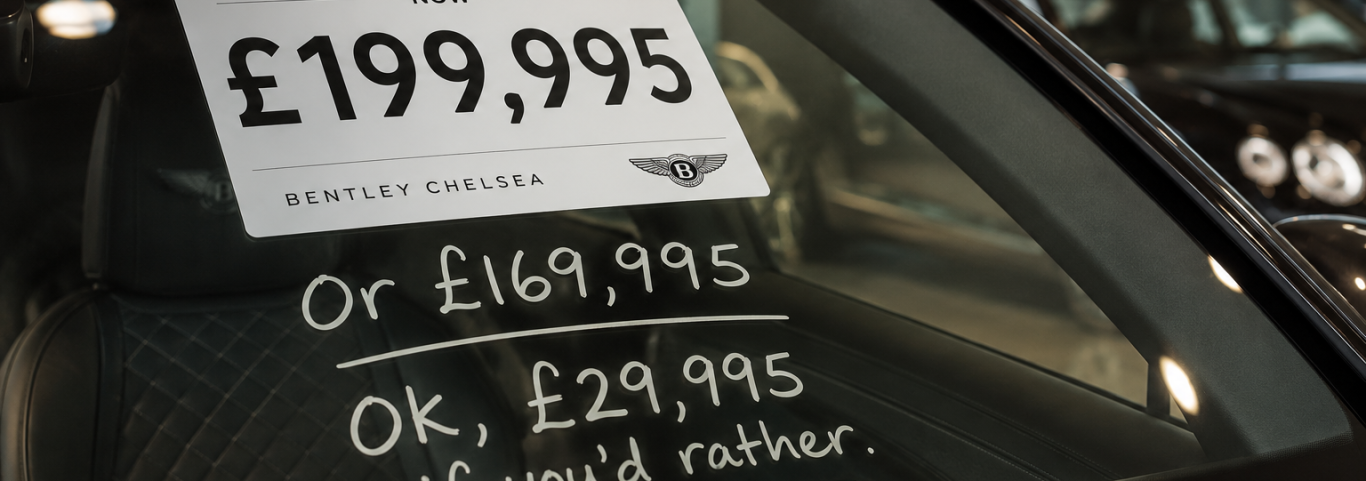
Plenty of businesses are too cheap because they’ve never properly connected what they do to the value it creates.
They sell the work. They sell the hours, the platform, the retained support, he deliverables, the licences, the dashboards, the workshops, the reports.
Then wonder why buyers push back on price.
The buyer isn’t being difficult. They’re responding to the way the offer has been framed.
When a business describes itself as a supplier of tasks, it gets judged as a supplier of tasks. That means day rates. Licence fees. Hours. Outputs. Procurement spreadsheets. Soul death in columns B to F.
Once you’ve positioned yourself as a cost, don’t act shocked when the buyer treats you like one.
The expensive problem
Most underpricing starts long before the quote goes out.
It starts when the business can’t clearly answer one question: What expensive problem do we remove?
That’s the commercial centre of the whole thing. If the problem isn’t expensive, the solution won’t feel valuable. If the cost of inaction isn’t clear, the price becomes the most obvious thing to challenge.
This is where many perfectly good businesses make life harder for themselves.
They know what they do. They can explain the process. They can describe the service. They can list the features. They can talk for hours about the clever bit in the middle. Fine.
But the buyer is usually thinking about something else.
Lost revenue. Wasted time. Risk. Missed opportunities. Internal friction. Slow decisions. A board breathing down their neck. A sales team blaming marketing. A founder still dragged into every deal because nobody else can explain the value properly.
That’s where the money is.
Buyers pay more when they understand the commercial pain being reduced, removed or prevented. They pay more when the outcome feels safer, clearer and more valuable than the alternatives.
Nobody pays premium prices because you worked really hard on the proposal. Nobody cares.
Work is easy to compare
Businesses often describe the work because the work is visible.
Professional services firms sell audits, strategy, workshops, advice, retainers and reports. B2B tech firms sell dashboards, workflows, integrations, automations, modules and platforms.
All accurate. All useful in the right context. Mostly useless as the main reason to buy.
The commercial question is simple: What gets better?
Do we make more money? Do we lose less time? Do we reduce risk? Do we improve conversion? Do we stop opportunities leaking out of the business? Do we make the sales process sharper? Do we give the leadership team better decisions, faster?
If your answer is “you get a monthly report”, congratulations. You’ve described admin.
Get it in the bin.
The work matters because it gets the buyer somewhere. It’s the route, not the reason. And if you spend too much time selling the route, don’t be surprised when the buyer asks whether there’s a cheaper bus.
This is where price starts to wobble.
A £50k service solving a £60k problem feels painful. A £50k service solving a £500k problem feels sensible.
Same price. Different commercial context.
Most price resistance comes from that missing context. The buyer doesn’t understand what the problem is costing them, so they compare your price against cheaper alternatives.
That’s rational. Annoying, yes. But rational.
Discounting is positioning failing in public
Sales teams often end up defending price at the end of the conversation because the business hasn’t done the work earlier.
The expensive problem hasn’t been made clear. The cost of doing nothing hasn’t landed. The proof is too focused on activity. The cheaper alternatives haven’t been dealt with properly.
So the buyer asks for a discount.
And that’s not cheeky, that’s just your positioning failing in public.
If the buyer only sees cost, they’ll negotiate cost. If they see risk reduction, revenue improvement, time saved or margin protected, the conversation changes.
This doesn’t mean everyone will pay your price. Some people won’t. Good.
Some buyers are wrong for you, and pretending otherwise is how businesses end up with full pipelines, knackered teams and margins thinner than pub bog paper.
Bad-fit revenue is still bad.
Some customers cost too much to serve. They ask for too much, value too little, negotiate too hard and pull the business away from the work it should actually be winning.
When positioning is weak, qualification gets weak too. You start saying yes because the revenue is there. Six months later, everyone’s miserable, delivery is on fire and the margin has vanished down the back of the sofa.
Revenue is not all equal.
Some of it is simply expensive nonsense.
Cheap gets expensive
Being cheap doesn’t only reduce margin. It changes the business.
As a rule of thumb, a 1% price increase can do roughly three times the profit work of a 1% increase in sales volume, because price goes straight to margin while volume brings cost, delivery and operational drag along for the ride.
Read it again. A 1% increase in price delivers 3X the same increase in sales.
Positioning on price attracts more price-sensitive customers. It weakens perceived value. It trains buyers to negotiate. It forces the business to take on more work to make the same money.
Then delivery gets stretched. Quality slips. The team gets tired. The founder gets dragged back into the weeds. Revenue grows, but profit doesn’t. The business looks bigger and feels worse.
Lovely stuff. Straight in the bin.
This is why “we’ll make it up in volume” is usually a cry for help with a spreadsheet attached.
Volume only helps when the economics work.
If every client or customer needs too much hand-holding, too much discounting, too much scope creep and too much senior attention, the business isn’t scaling. It’s just becoming louder.
Pricing power gives you room to breathe.
Better margin creates space to invest in quality, talent, proof, customer success, sales support and marketing that actually compounds.
Cheap removes that space.
And then everyone wonders why the business feels harder than it should.
How to earn pricing power
Pricing power is earned through clarity.
You need to define the expensive problem. Name the cost of inaction. Connect the offer to measurable commercial improvement. Qualify harder. Build proof around outcomes rather than activity.
That last bit matters.
Case studies shouldn’t stop at “we delivered a new website”, “we ran a campaign” or “we implemented the platform”. That’s the work. The buyer needs to know what changed because of it.
What improved?
What became faster, safer, easier or more profitable? What risk disappeared? What revenue increased? What cost reduced? What decision became easier to make?
That’s the proof that makes price feel sensible.
So run the pricing power test.
- What expensive problem do we solve?
- What does that problem cost the buyer if they ignore it?
- What commercial result improves when we fix it?
- Why are we a better choice than cheaper alternatives?
- What proof do we have that makes the price feel sensible?
If those answers are vague, your price will feel vague. And vague pricing gets battered.
This is where proper marketing leadership earns its keep.
A commercially useful marketing lead should help the business understand the market, sharpen the ideal customer profile, define the value proposition, improve proof, align sales and marketing, and build a process that protects margin.
That’s the work that helps a business defend price, win better customers and make more money.
Because if marketing can’t help with that, what exactly is it for?
You’re probably not too expensive. You just haven’t made the problem expensive enough.
That’s where the money is leaking.
Right. The Obvious Questions Answered
How do I raise prices without losing good customers?
Start by making the value clearer before you change the price.
Most businesses get nervous about price rises because they haven’t properly connected the work to the commercial improvement it creates. So the price feels like an isolated number. That’s where the panic starts.
You need to show what the problem costs, what gets better when you solve it, and why your offer is a safer route to that outcome than the cheaper alternatives.
Some customers may still leave. Fine. That’s not always a disaster. If a customer only values you at the old price, constantly negotiates, or needs too much support to remain profitable, losing them may improve the business rather than damage it.
Good customers don’t pay more because you asked nicely.
They pay more when the value makes sense.
How do I know if we’re too cheap?
Look at who your pricing is attracting and what those customers do to the business.
Being cheap doesn’t just reduce margin. It changes the shape of the company. You attract more price-sensitive buyers, train people to negotiate, and need more work to make the same money. Then delivery gets stretched, quality drops, and everyone gets very busy while the profit quietly disappears down the back of the sofa.
Lovely stuff.
You’re probably too cheap if you’re winning work by apologising, discounting, over-servicing or saying yes to customers you know are wrong for you.
A useful test is simple: can you clearly explain the expensive problem you solve, what it costs the buyer to ignore it, and what commercial result improves when you fix it?
If those answers are vague, your pricing probably is too.
Why do prospects keep saying we’re too expensive?
Usually because the problem doesn’t feel expensive enough.
A buyer will push back on price when they don’t understand the value, the risk of doing nothing, or why you’re a better choice than the cheaper option. At that point, they compare the easiest things to compare: day rates, licences, hours, outputs and deliverables.
That’s where margin goes to die.
A £50k service solving a £60k problem feels painful. A £50k service solving a £500k problem feels sensible. Same price. Different commercial context.
So the question is rarely “how do we defend the price better at the end?”
The better question is: “Have we made the commercial pain clear enough at the start?”
Price resistance is often positioning failing in public.
Annoying, yes. Also true.
Should we discount to win the deal?
Sometimes, but only if something else changes.
Discounting without changing scope is just giving away margin because the buyer asked. That’s not commercial flexibility. That’s fear with a calculator.
If a buyer can’t afford the full offer, reduce the scope, reduce the speed, reduce the senior time, reduce the deliverables or change the terms. The cost is the cost. What can change is what they get for the budget they have.
The bigger issue is why the discount conversation is happening in the first place. If the buyer doesn’t understand the value, they’ll negotiate the price. That’s rational. You’ve given them nothing better to judge.
Discounting is dangerous because it trains the relationship. The buyer learns that the number is soft, and you learn to protect revenue at the expense of margin.
That gets very expensive, very quickly.
How do we justify a premium price against cheaper competitors?
You don’t justify it by saying you’re better.
You justify it by proving you’re the safer bet.
Cheaper competitors will always exist. Some may even be perfectly good. So the job isn’t to pretend price doesn’t matter. It clearly does. The job is to show why your price is sensible against the cost of the problem, the risk of getting it wrong and the commercial outcome the buyer needs.
That means proof around outcomes, not activity.
Don’t stop at “we delivered a strategy”, “we built a platform”, or “we ran a campaign”. Show what changed. Revenue improved. Time was saved. Risk reduced. Conversion increased. Sales became easier. The leadership team made better decisions.
Premium pricing works when the buyer understands the cost of inaction and believes you’re more likely to fix the problem properly.
Being expensive isn’t the issue.
Being unclear is.
If this kind of thing is your bag, follow me John Lyons on LinkedIn for more practical and actionable tips and hints on doing more effective marketing.